 ultimate-guide
The Safe Guide to Buying Used Cars Online
Last Updated: October 31, 2026
Quick Summary
Buying used cars online safely means verifying the seller, the vehicle history, and the payment trail before money moves. Get preapproved financing, run a vehicle history report, and book an independent pre-purchase inspection you pay for directly. Then pay only through a traceable method like a bank wire to a verified dealer account or an escrow service.
- Compare at least five comparable listings before committing to one vehicle.
- A clean history report does not confirm current mechanical condition, so still book an inspection.
- Never send a deposit before an independent inspection and a signed purchase agreement.
- Ask for the out-the-door price in writing before you negotiate anything.
- Negotiate a written inspection period after delivery before you pay.
Table of Contents
- Why Buying Used Cars Online Is Safer Than You Think (When You Verify)
- The Online Used Car Buying Checklist: Every Step in Order
- How to Read a Used Car Vehicle History Report
- Arranging a Pre-Purchase Inspection for Used Cars You Cannot Touch
- How to Avoid Used Car Scams: Red Flags That End the Deal
- Pricing, Negotiation, and the Out-the-Door Number
- Financing and Payment: Protecting Your Money and Your Data
- Delivery, Return Windows, and What to Do When the Car Is Wrong
- State Rules, Taxes, and Title Transfer After an Online Purchase
- Tell Us the Truck, Van, or SUV You Need and We Will Source It
- Frequently Asked Questions
Why Buying Used Cars Online Is Safer Than You Think (When You Verify)
Only about 3% of consumers have actually bought a car online, yet 29% say they want an online-only experience, according to ConsumerAffairs' online car buying statistics. That gap tells you something useful: most people are curious, but hesitant. The fear isn't really about the internet. It's about handing money to a stranger for a machine you haven't touched. When you verify the seller, the vehicle history, and the payment trail, buying used cars online safely can be achievable.
The process has three phases: research, verification, and transaction. Get all three right and the distance between you and the seller stops mattering. Skip one and you're exposed.
Below, we'll walk through every step in order, from preapproval to title transfer, plus the scam red flags that should end a deal on the spot.
The Online Used Car Buying Checklist: Every Step in Order
An online used car buying checklist is a sequenced set of verification tasks, from budget setting to title transfer, that you complete before and during a remote purchase. The order matters: each step protects the next one.
Here's the full sequence at a glance.
| Phase | Key Actions | Why It Protects You |
|---|---|---|
| Before you search | Set budget, get loan preapproval, write must-have list | Prevents emotional overspending |
| During the search | Compare listings, vet seller reputation, benchmark asking price | Filters fraudulent listings early |
| Before you pay | Independent inspection, paperwork review, secure payment method | Confirms condition and legal title |
Before You Search: Budget, Preapproval, and Your Must-Have List
Start with the number, not the car. Get preapproved for financing before you browse, so you know your ceiling and your interest rate in writing.
Then write a must-have list with three tiers: non-negotiable (towing capacity, seating, drivetrain), negotiable (color, trim), and nice-to-have. Most remote buying mistakes happen when a buyer falls for photos of a vehicle that fails their actual requirements.
During the Search: Listings, Seller Reputation, and Asking Price
Compare at least five comparable listings before you commit to one. Check seller reputation through customer reviews and, for dealerships, state licensing records. On marketplaces, a private seller with no history and a below-market price is a pattern worth walking away from.
The FTC's Auto Buyer Study found that many buyers research online to select both a dealer and a specific model, so use that research phase deliberately.
Before You Pay: Inspection, Paperwork, and Payment Method
Never send money before an independent inspection and a clean title check. Request the purchase agreement and bill of sale in advance, and pay through a traceable method: a bank wire to a verified dealer account or an escrow service. Gift cards, peer-to-peer apps, and cryptocurrency requests are fraud signals, not conveniences.
How to Read a Used Car Vehicle History Report
A used car vehicle history report is a record compiled from title, insurance, and service databases that shows a vehicle's accident history, title status, odometer readings, and reported maintenance. It's a screening tool, not a guarantee.
Run the vehicle identification number through a reputable reporting service and read it for four things:
- Title status: "Salvage," "rebuilt," or "flood" brands mean the vehicle was declared a total loss. Walk away unless the price reflects it and your insurer will cover it.
- Odometer readings: Inconsistent mileage between records suggests rollback fraud.
- Accident history: Reported collisions tell you what to ask the inspector to examine closely.
- Maintenance records: Regular service entries suggest a cared-for vehicle.
What most guides miss is that a clean report doesn't confirm current mechanical condition. The FTC's guidance on buying a used car from a dealer treats history reports as one input among several, alongside warranties and payment terms, not a substitute for inspection. Treat the report as a filter that decides which cars deserve an inspection.
Arranging a Pre-Purchase Inspection for Used Cars You Cannot Touch
A pre-purchase inspection for used cars is a paid evaluation by an independent mechanic who examines the vehicle's mechanical and structural condition before you buy. For remote purchases, it's the closest thing to being there in person.
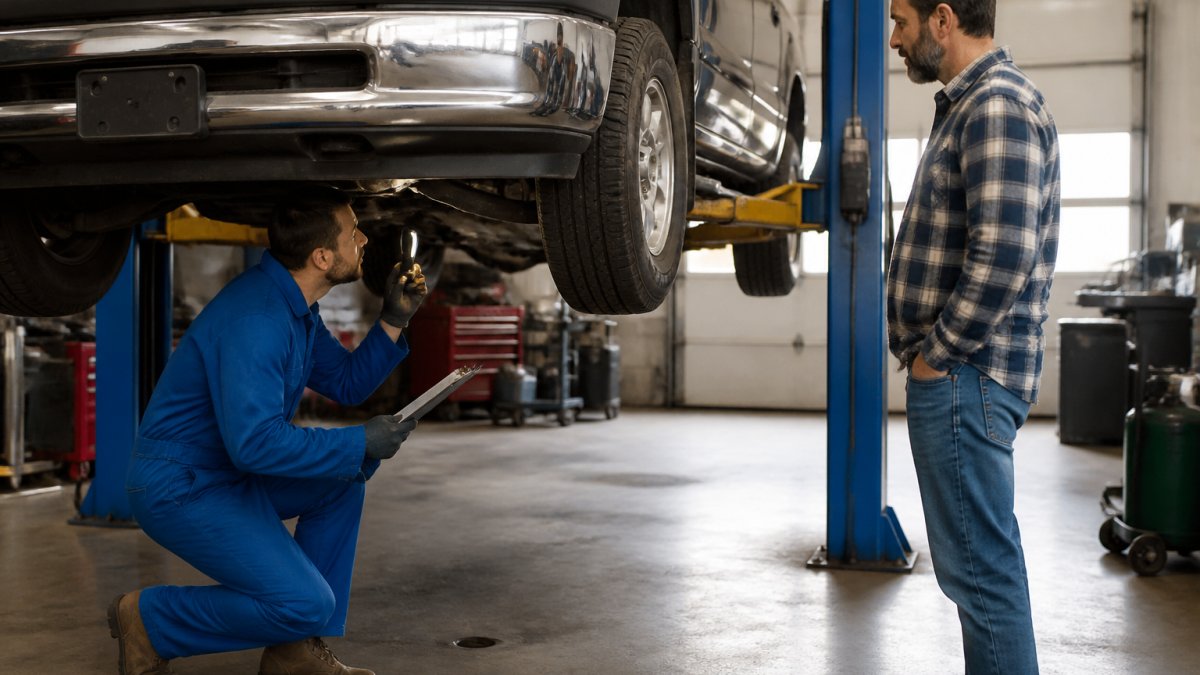
Here's how to arrange one remotely:
- Search for a mobile inspection service or independent shop near the vehicle's location.
- Book and pay the inspector directly, never through the seller.
- Ask for a written report with photos and a compression or diagnostic scan where relevant.
- Call the inspector afterward to hear what didn't make the report.
Inspection fees depend on the provider and vehicle type. If a seller refuses to allow an inspection, that's your answer. End the conversation.
How to Avoid Used Car Scams: Red Flags That End the Deal
Learning how to avoid used car scams comes down to recognizing patterns, then running a short verification sequence before any money moves. Fraudulent listings share recognizable traits, and the safest move is always the same: stop and verify.
The 60-second listing screen
Before you contact a seller, run this screen on the listing itself:
- Price versus market. Pull the same make, model, trim, mileage, and year on a pricing guide and two marketplaces. A listing priced well below the local range, not slightly below, but conspicuously below, is a pattern, not a bargain. Sellers with a genuine reason to discount (moving, estate sale) will still tolerate verification.
- Photo provenance. Reverse-image search two or three listing photos. Stock photos, dealer stock images reused across ads, or photos that appear on another listing under a different seller are disqualifying.
- VIN presence and consistency. A legitimate listing shows the VIN or provides it on request. Run it through a vehicle history report and confirm the year, make, model, and trim in the report match the listing. Mismatched VIN details are a fraud signal.
- Seller identity. Ask for the name on the title and compare it to the name on the listing and the communication. A seller who will not share the name that appears on the title, or whose name does not match, is a walk-away.
- Location logic. Confirm the vehicle's physical location and ask for a live video walkaround that includes the VIN plate on the dashboard or door jamb. A seller who cannot produce a live walkaround is not in possession of the car.
Payment red flags
Payment is where fraud becomes irreversible. Treat these as deal-enders:
- Gift cards, peer-to-peer apps, cryptocurrency, or wire transfers to an individual. These are the preferred instruments of fraud because they are difficult or impossible to reverse. A legitimate dealer accepts a bank wire to a verified business account or a cashier's check; a legitimate private seller will accept an escrow service or an in-person transaction at a bank.
- Deposits before inspection. A request for a holding deposit before you have spoken to an independent inspector, or before a purchase agreement exists, is a pressure tactic. A refundable deposit held in escrow is acceptable; a deposit sent directly to a seller is not.
- Fake payment confirmations. Fraudsters send screenshots of wire confirmations or escrow "funds released" notices. Never release a title, keys, or vehicle based on a screenshot. Confirm receipt with your own bank or the escrow provider's portal, using a phone number or URL you looked up independently, not one the seller provided.
- Overpayment and refund schemes. A "buyer" or "seller" who sends too much and asks you to refund the difference is running a classic reversal scam. Stop the transaction and report it.
Communication red flags
- Urgency. "I have another buyer flying in tomorrow," "the deposit must be today," or a price that expires within hours is designed to short-circuit verification. Legitimate sellers can wait a day for an inspection.
- Off-platform migration. A seller who immediately moves the conversation to a messaging app, refuses to communicate through the marketplace, or asks you to email documents outside the platform is avoiding the marketplace's fraud controls and record-keeping.
- Refusal of inspection or video. A seller who will not allow an independent pre-purchase inspection, or who refuses a live video walkaround, has given you the answer. End the conversation.
- Paperwork mismatches. The seller's name does not match the title, the title is a duplicate or a photocopy, the odometer disclosure is missing, or the seller asks you to "sign the title later." Any of these ends the deal.
Where to report a suspected scam
If you encounter a fraudulent listing or a seller who matches these patterns, report it to the marketplace, to your state attorney general's consumer protection division, and to the FTC at ReportFraud.ftc.gov. Reporting creates a record and helps shut down repeat operators.
Quick checklist
- Price benchmarked against three comparable listings
- Photos reverse-image searched
- VIN matches listing and history report
- Seller name matches title
- Live video walkaround with VIN plate shown
- Independent inspector booked and paid directly by you
- Payment method is traceable and reversible if the car is not as described
- No deposit before inspection and signed purchase agreement
- No off-platform communication or document sharing
Pricing, Negotiation, and the Out-the-Door Number
The number that matters is the out-the-door price: the asking price plus sales tax, title and registration fees, and any dealer documentation fees. Ask for it in writing before you negotiate anything.
Benchmark the asking price against comparable listings and a pricing guide, then negotiate from evidence, not emotion. On a remote deal, use the inspection report as use: documented issues are a legitimate basis for a lower offer. Get every agreed figure, including fees, written into the purchase agreement before you send payment. You should ask for fees to be itemized.
Financing and Payment: Protecting Your Money and Your Data
Preapproved financing from a bank or credit union gives you a rate to compare against dealer financing. When you do share financial data online, confirm the site uses encryption and never email documents containing your SSN.
For payment, use the most traceable method available: a bank wire to a verified business account or an escrow service that releases funds after delivery and inspection. Keep every receipt and the signed purchase agreement. If a seller pushes you toward an untraceable method, treat it as a scam warning sign and walk away.
Delivery, Return Windows, and What to Do When the Car Is Wrong
Delivery terms are where remote purchases most often go wrong, because the car changes hands before you have had a chance to inspect it. The fix is to negotiate the delivery, inspection, and remedy terms before you pay, and to get them into the purchase agreement in writing.
Get the delivery terms in writing
Before payment, confirm and document:
- Who pays for shipping and whether the quote is door-to-door or terminal-to-terminal. Open transport is cheaper; enclosed transport costs more and is worth it for a vehicle you care about. Ask whether the carrier is insured and bonded, and get the carrier's name and MC number in writing.
- The delivery window and what happens if the carrier is late. A written window with a defined remedy (price adjustment, cancellation right) protects you.
- Condition at delivery. Ask the seller to document the vehicle's condition with a dated photo set immediately before loading, and to provide a bill of lading that notes any existing damage. Compare the bill of lading to the photos when the car arrives.
- Who holds the title during transit. The title should not be mailed separately to arrive after the car with no tracking. Ask for the title to be sent by a traceable method, and confirm the name and address on the title match the seller.
Negotiate an inspection period
An inspection period is a defined window after delivery during which you can have your own mechanic examine the vehicle and raise issues before the sale is final. It is the single most valuable term you can negotiate in a remote purchase, and it is not automatic, you have to ask for it.
A workable inspection period has four parts:
- Length. A short window (often a few days) is common for dealer sales; private sellers may resist any window. Push for enough time to book a local mechanic and get a written report.
- Scope. The period should cover mechanical, structural, and title/paperwork issues, not just cosmetic condition.
- Notice mechanism. Define how you raise an issue: in writing, with photos and a mechanic's report, within the window.
- Remedy. Define what happens if the car is materially different from the listing: a repair allowance, a price adjustment, a return and refund, or cancellation. A return right with no defined refund timeline is not a real remedy.
When the car arrives materially different
If the vehicle arrives with undisclosed problems, damage not on the bill of lading, a check-engine light, a title brand that was not disclosed, or a VIN that does not match the paperwork, act quickly and in writing:
- Document immediately. Photograph the vehicle from every angle, photograph the odometer and VIN plate, and get a written mechanic's report. Do not modify or repair the car before documenting.
- Notify the seller in writing within the inspection window, stating the specific discrepancies between the listing and the delivered vehicle, and the remedy you are requesting.
- Preserve the payment trail. Keep the purchase agreement, the bill of lading, the listing screenshots, all messages, and the payment receipts. These are your evidence if the dispute escalates.
- Escalate in order. Start with the seller, then the marketplace or escrow provider, then your card issuer or bank (for chargeback or wire recall, where available), then your state attorney general's consumer protection division. If the amount is significant, a consumer law attorney can advise on remedies under your state's consumer protection statute.
Return policies: what to expect
Return policies vary widely. Some dealers offer a short money-back window; many private sellers offer none. Before you pay, ask three questions in writing: Is there a return window, how many days is it, and what condition must the car be in to qualify? A return policy that excludes "buyer's remorse" but covers "materially not as described" is still valuable, it gives you a remedy for the problems that matter most in a remote purchase.
State Rules, Taxes, and Title Transfer After an Online Purchase
Sales tax, registration, and title transfer rules vary by state, and the paperwork burden usually falls on you when buying from an out-of-state seller. Before you pay, confirm three things with your state's motor vehicle agency: how sales tax will be collected, what documents the title transfer requires, and whether you need an inspection to register.
Ask the seller for the signed title, a bill of sale, and an odometer disclosure statement. Never accept a promise to "send the title later." Without a clean title in hand, you don't own the car.
Tell Us the Truck, Van, or SUV You Need and We Will Source It
Finding the exact vehicle remotely is the hard part. Carolina Car connections offers personalized vehicle acquisition and delivery for buyers who need a specific truck, van, SUV, or commercial vehicle.
Contact Carolina Car connections to discuss sourcing the exact vehicle you need.
Frequently Asked Questions
Is it safe to buy a used car online?
It can be, provided you verify three things before money moves: the seller, the vehicle, and the paperwork. Ask for the vehicle identification number and run a history report, book an independent inspection, and confirm the title is clean and in the seller's name. Many buyers still find the online process unfamiliar. Treat buying used cars online like an in-person deal with extra verification steps.
What should be on my online used car buying checklist before I send a deposit?
Confirm the seller's identity and business license if they are a dealer, match the VIN on the listing to the VIN in the history report and on the door jamb, review the title status for salvage or lien brands, and get a pre-purchase inspection booked or completed. Ask for the out-the-door price in writing, including sales tax and dealer fees, and pay by a traceable method such as a bank transfer or certified check. Never wire money to an individual you have not verified.
What does a used car vehicle history report actually tell me?
A history report shows title status, reported accidents, odometer readings, prior registrations, and sometimes maintenance records, all tied to the vehicle identification number. It is a starting point, not a verdict. The FTC's used-car guidance treats history reports as one input alongside warranties, payment terms, and a mechanical check, not a replacement for either. A clean report does not prove the engine, transmission, or frame are sound, and a salvage title can still appear on a car that looks fine in photos.
Do I still need a pre-purchase inspection for used cars bought online?
Yes. Photos and video cannot show frame damage, worn suspension, or a failing transmission. Hire an independent mechanic near the seller, not one the seller recommends, and ask for a written report covering the engine, transmission, brakes, tires, frame, and diagnostic codes. Many mobile inspection services cover remote sellers for a few hundred dollars, which is cheap compared to discovering a $4,000 repair after delivery. If a seller refuses an inspection, walk away.
How do I avoid used car scams when the deal is remote?
Watch for a price far below market value, a seller who refuses video calls or inspections, pressure to wire money or pay with gift cards, and listings with mismatched photos or a VIN that does not match the car. Verify the seller's identity and dealership license through your state's motor vehicle agency, and insist on a written purchase agreement and bill of sale. Legitimate sellers expect verification and will not rush you past it.
What is the safest way to pay for a used car online?
Use a traceable method tied to a written purchase agreement: a bank wire to a verified dealership account, a certified check, or financing through a lender you chose. Avoid gift cards, peer-to-peer apps with no purchase protection, and wire transfers to personal accounts. If you finance, confirm the lender's identity and read the annual percentage rate and total cost in writing before signing. Keep every receipt and the signed bill of sale until the title is transferred and registered in your name.
