 How-to
Avoiding Salvage Title Vehicle Scams: A Buyer's Checklist
Last Updated: November 14, 2026
Quick Summary
A salvage title scam hides a vehicle's damage history, often by selling a badly damaged, flooded, or totaled car with a clean-looking title. To avoid one, match the VIN across the title, dashboard, and door jamb, run an NMVTIS vehicle history report, and book an independent pre-purchase inspection.
- Match the VIN on the title, dashboard, and door jamb before any other step.
- Run an NMVTIS vehicle history report, but treat it as one step, not the final answer.
- Choose an independent mechanic yourself for a pre-purchase inspection.
- Be wary of titles that look altered, smudged, or have erasures.
- Walk away from sellers who rush you or refuse an inspection.
Table of Contents
- How Salvage Title Scams and Title Washing Work
- Salvage Title Red Flags to Check Before You Buy
- Verify the VIN, Then Book an Independent Pre-Purchase Inspection
- Frequently Asked Questions
How Salvage Title Scams and Title Washing Work
Salvage title scams usually work by hiding a vehicle's damage history. A car that was badly damaged, flooded, or totaled may be sold with a clean-looking title. Title washing is the practice of moving a vehicle through states to remove or change a branded title. NMVTIS vehicle history reports can help buyers spot fraud, but they are one tool among several.
Salvage Title Red Flags to Check Before You Buy
Watch for these warning signs before you commit:
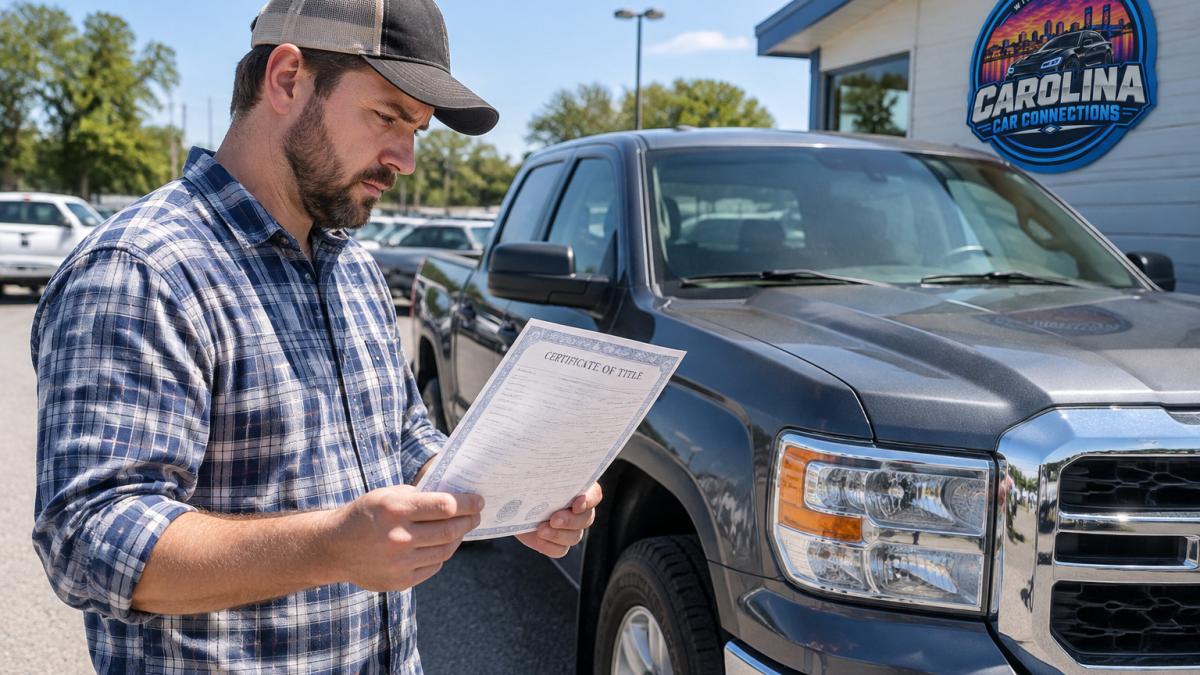
- The seller cannot show a clear, matching title in their own name
- The title looks altered, smudged, or has erasures
- The price is far below similar vehicles in the area
- The seller rushes you or refuses an inspection
Verify the VIN, Then Book an Independent Pre-Purchase Inspection
Start by matching the VIN on the title, the dashboard, and the door jamb. Then run a vehicle history check using a source such as NMVTIS vehicle history reports. Use the report as one step, not the final answer.
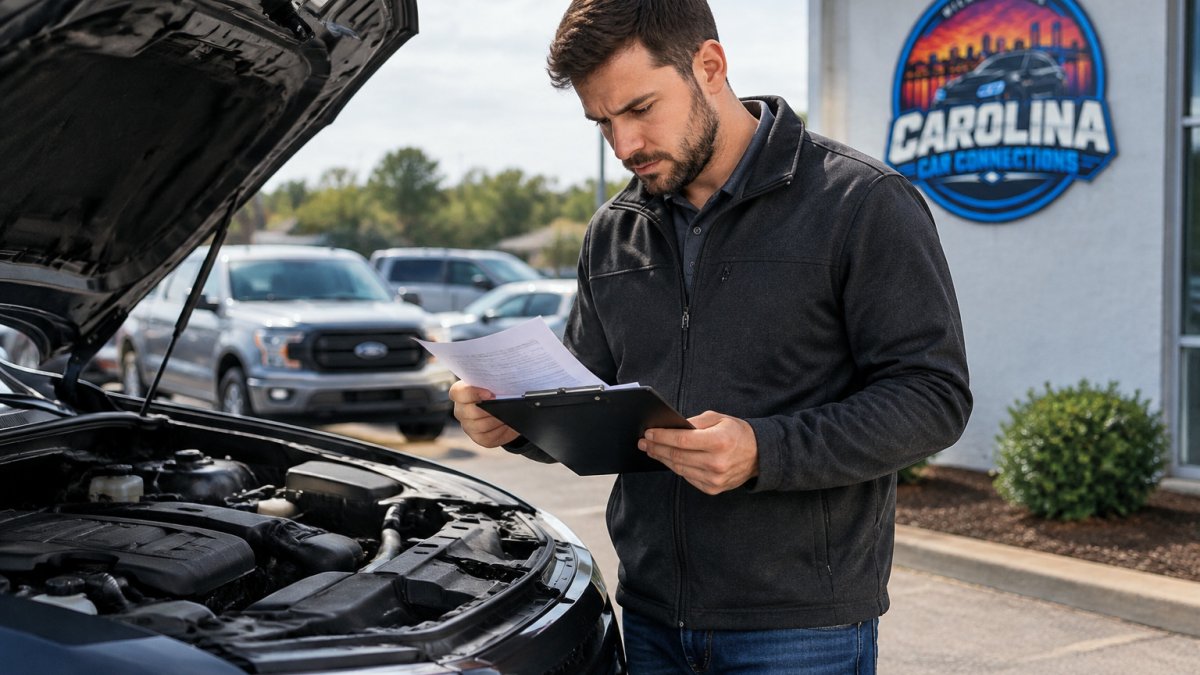
Next, book an independent pre-purchase inspection with a mechanic you choose yourself. This is the best way to catch damage a report might miss.
Want more help before you buy? Read The Safe Guide to Buying Used Cars Online for a full walkthrough of the inspection step.
Browse our inventory and apply for financing at Carolina Car Connections, or contact us about shipping availability and pricing.
Use this quick checklist to confirm the vehicle's identity and history before you commit.
| Step | What to do | Timing |
|---|---|---|
| Match the VIN | Compare the VIN on the title, dashboard, and door jamb | Before any other step |
| Run a history check | Use an NMVTIS vehicle history report | Before booking an inspection |
| Treat the report as one step | Do not rely on it as the final answer | Throughout |
| Book an inspection | Choose an independent mechanic yourself | Before you buy |
Frequently Asked Questions
Can a VIN check show whether a vehicle has a salvage title?
A VIN check can show title brands and past records for a vehicle, including salvage or branded titles that were issued by a state. Official sources such as NMVTIS can help buyers check a vehicle's history. A report is still one check, not a guarantee. Look at the physical title, compare the VIN on the car with the paperwork, and consider an independent inspection before you buy.
Why should you be cautious about buying a salvage title car?
A salvage title means an insurer or state has declared the vehicle damaged to the point of total loss, and the car may have hidden structural, electrical, or safety problems even after repair. Repaired salvage vehicles can also be harder to insure or register, depending on state rules. Before you buy, ask the seller for the title, check the vehicle history, and get an independent mechanic to inspect the car.
What should you do if a seller's title or VIN information does not match?
Stop the purchase until the discrepancy is explained. Compare the VIN on the title, the dashboard, the driver's door jamb, and the registration. If the seller cannot explain the difference or the title looks altered, walk away and consider reporting the seller to your state motor vehicle agency or local consumer protection office.