 Ultimate guide
Used Car Buying Guide for Wilmington Shoppers
Last Updated: November 15, 2026
Quick Summary
A used car buying guide starts with your budget, including insurance, registration, fuel, and maintenance, not just the sticker price. Pull your credit report before you shop, then compare financing offers on total cost. Always get a pre-purchase inspection from a mechanic you choose, especially in coastal areas where salt air causes corrosion.
- Compare loan offers using the annual percentage rate, term, and total of payments.
- Longer loan terms lower monthly payments but raise total interest paid.
- Salt air accelerates corrosion, so check the undercarriage, door bottoms, and wheel arches.
- Walk away if a seller resists an independent pre-purchase inspection.
Table of Contents
- Start With a Realistic Budget and Your Credit Picture
- Used Car Financing Options for Every Credit Situation
- Questions to Ask When Buying a Used Car
- Used Car Inspection Checklist for Wilmington Buyers
- Used Car Test Drive Checklist
- Vehicle History Reports, Titles, and Paperwork
- Negotiating the Final Price Without Pressure
- Trade-Ins, Shipping, and Protection Options
- Browse Our Inventory and Start Your Financing Application
- Frequently Asked Questions
Start With a Realistic Budget and Your Credit Picture
Buying a used car starts with knowing what you can afford, and that means looking at more than the sticker price. A solid used car buying guide begins with your budget, not the showroom. The average price of a three-year-old used car reached $32,461 in the second quarter of 2026, according to Edmunds as reported by Consumer Reports on finding a good used car now. With prices running that high, a realistic budget protects you from stretching too far.
Start by reviewing your monthly income and existing bills. Add the costs that come with ownership, including insurance, registration, fuel, and routine maintenance. Those ongoing costs often matter as much as the purchase price itself. If you are unsure how to build that number, our guide on setting a used car budget from your income walks through the steps.
Your credit picture shapes your options too, and a good used car buying guide always covers it early. Lenders review your credit history, income, and existing debts before approving a loan. Pull your credit report before you shop so you know where you stand. Financing is always subject to lender approval and requirements, so no dealer can promise a particular rate or payment ahead of time.
Used Car Financing Options for Every Credit Situation
Financing is where many first-time buyers feel most uncertain, so it helps to understand the basic choices and what each one asks of you. A traditional auto loan through a bank or credit union is one route, and it often rewards an existing relationship and a strong credit profile. Dealer financing, where the dealership helps submit your application to lenders, is another option to ask about. Our financing options cover a range of credit histories, including bad credit or limited credit, subject to lender approval and requirements.
Lenders generally review your credit history, income, existing debts, and the vehicle itself.
Term length is the lever buyers most often overlook. A longer loan lowers the monthly payment but raises the total interest you pay and can leave you owing more than the car is worth for longer. Compare offers on the total cost of the loan, not just the payment. Ask each lender for the annual percentage rate, the term, and the total of payments so you can line them up side by side.
Bad credit or limited credit does not automatically rule you out. Financing is subject to lender approval and requirements. If you want a closer look at that situation, see our step-by-step guide on getting a car with bad credit. Buyers who prefer Spanish-language help can also review our resource on Spanish-speaking auto financing in Wilmington.
ITIN financing may be available to applicants with a valid Individual Taxpayer Identification Number and qualifying identification, subject to lender requirements. Ask us what documents you will need before you apply.
Optional vehicle service contracts and GAP coverage are available. Neither is required, so compare the cost against your own situation before deciding.
Financing is always subject to lender approval and requirements, so no dealer can promise a particular rate, down payment, or payment amount ahead of time. What you can do is arrive prepared: know your budget, pull your credit report, and have your income and identification documents ready.
Questions to Ask When Buying a Used Car
Asking the right questions before you commit keeps you in control of the conversation. Start with the vehicle's history: who owned it, whether it was ever in an accident, and whether any recalls remain open. Then ask about the total price, not just the monthly payment. Dealer fees, taxes, title and registration charges, and any add-on products all change the final number.
Ask about the car's condition in specifics. Has it had major repairs? Are there service records? Is there a warranty, and what does it actually cover? Our full guide on questions to ask an online car seller before you buy covers this in more depth if you are shopping remotely.
The Federal Trade Commission's Auto Buyer Study on in-depth consumer interviews offers useful context on how buyers make these decisions and where they often feel pressured.
Used Car Inspection Checklist for Wilmington Buyers
A thorough inspection is one of the best ways to avoid surprises, and in a coastal market it needs to go beyond the standard walk-around. Salt air and humid summers accelerate corrosion on undercarriage components, brake lines, and electrical connectors, so a car that looks clean up top can still be hiding rust underneath. Plan to inspect in daylight and, if possible, after the vehicle has sat overnight so cold-start issues show up.
Start with the exterior. Look for uneven panel gaps, mismatched paint, and overspray that can signal bodywork. Check the lower edges of doors, the rear wheel arches, and the tailgate or trunk lip, which are common corrosion spots. Then get low and look at the frame, subframe, and exhaust for flaking metal or heavy surface rust rather than light dusting.
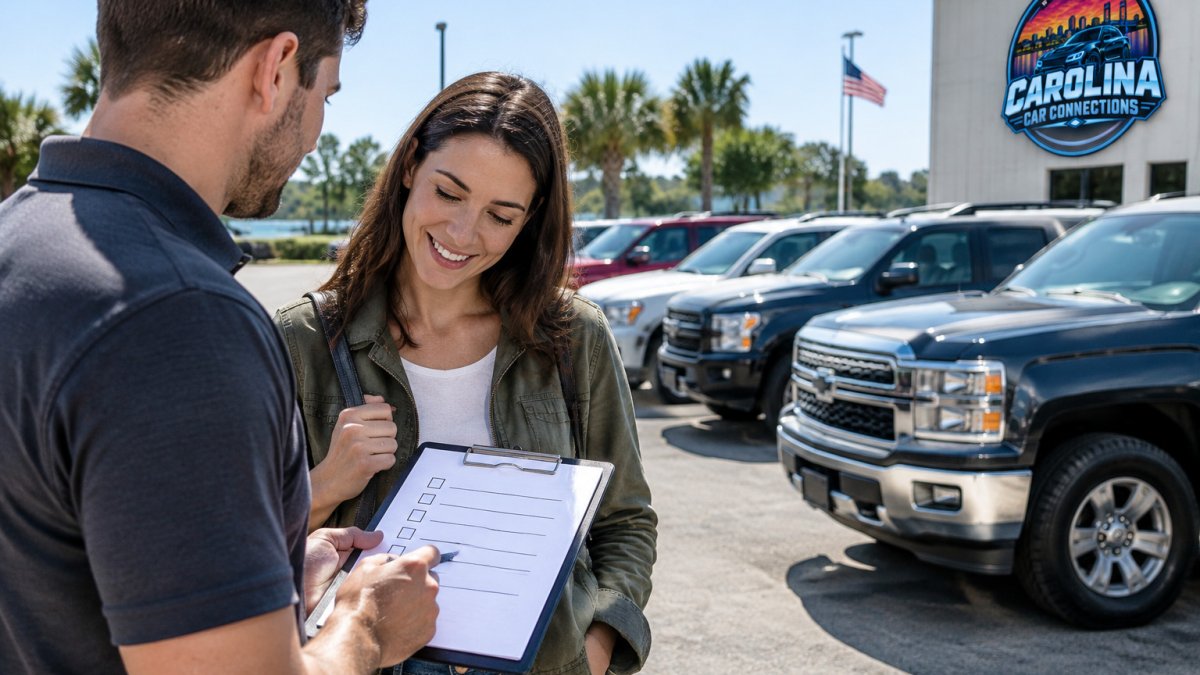
Use this checklist during your visit:
- Check the exterior for dents, paint mismatch, and rust on the undercarriage, door bottoms, and wheel arches
- Inspect tire tread depth and sidewall condition on all four tires, and confirm they match as a set
- Test all lights, wipers, windows, locks, and the air conditioning, including the rear defroster
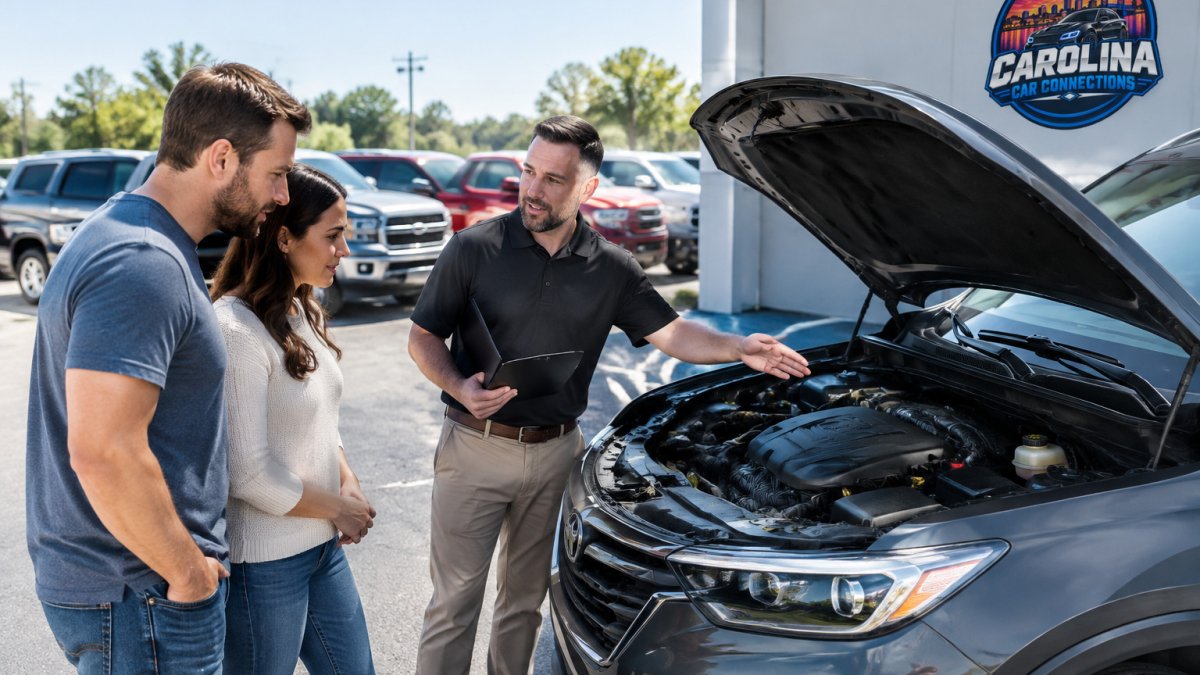
- Look under the hood for fluid leaks, cracked belts, and corrosion on the battery terminals
- Check the interior for water stains, musty smells, or damp carpet that can point to leaks
- Confirm the odometer reading matches the vehicle history and service records
- Ask whether an independent mechanic can perform a pre-purchase inspection
A pre-purchase inspection by a mechanic you choose is worth the time. Ask the mechanic to check for stored diagnostic codes and to note any corrosion on brake and fuel lines. Contact us to discuss independent inspection before you finalize any purchase.
Watch out: a seller who resists an independent inspection or pressures you to skip it is telling you something, and it is usually worth walking away.
Budget for Title, Registration, and Insurance
Inspection is only part of the readiness picture. Before you commit, budget for the paperwork and coverage that follow the sale. Plan to budget for insurance, which is required to register a vehicle and which your lender may also require (Official NCDMV: Vehicle Insurance Requirements). Get an insurance quote on the specific VIN before you buy, because rates vary widely by vehicle and by driver.
Registration and title work happen through the North Carolina Division of Motor Vehicles. Ask who is handling the title and registration paperwork before you sign. Ask who is handling the paperwork and what you will owe at signing so there are no surprises. Keep the bill of sale, the title, and your insurance card together until the registration is complete.
The checklist below sums up the main points to check during a used car inspection in a coastal market.
| Check | Why it matters | What to look for |
|---|---|---|
| Undercarriage and wheel arches | Salt air speeds up corrosion | Flaking metal or heavy surface rust |
| Tire tread and sidewalls | Confirms tire condition | Even depth across all four tires |
| Lights, wipers, AC, defroster | Confirms working equipment | Every function tested |
| Under the hood | Reveals leaks and wear | Fluid leaks, cracked belts, battery corrosion |
| Interior | Reveals hidden water damage | Water stains, musty smell, damp carpet |
| Odometer and records | Confirms mileage history | Reading matches history and service records |
| Pre-purchase inspection | Independent mechanic check | Seller who resists is a warning sign |
Used Car Test Drive Checklist
!A first-time buyer and a salesperson walking around a used SUV in a dealership lot, the buyer looking at the tires and body
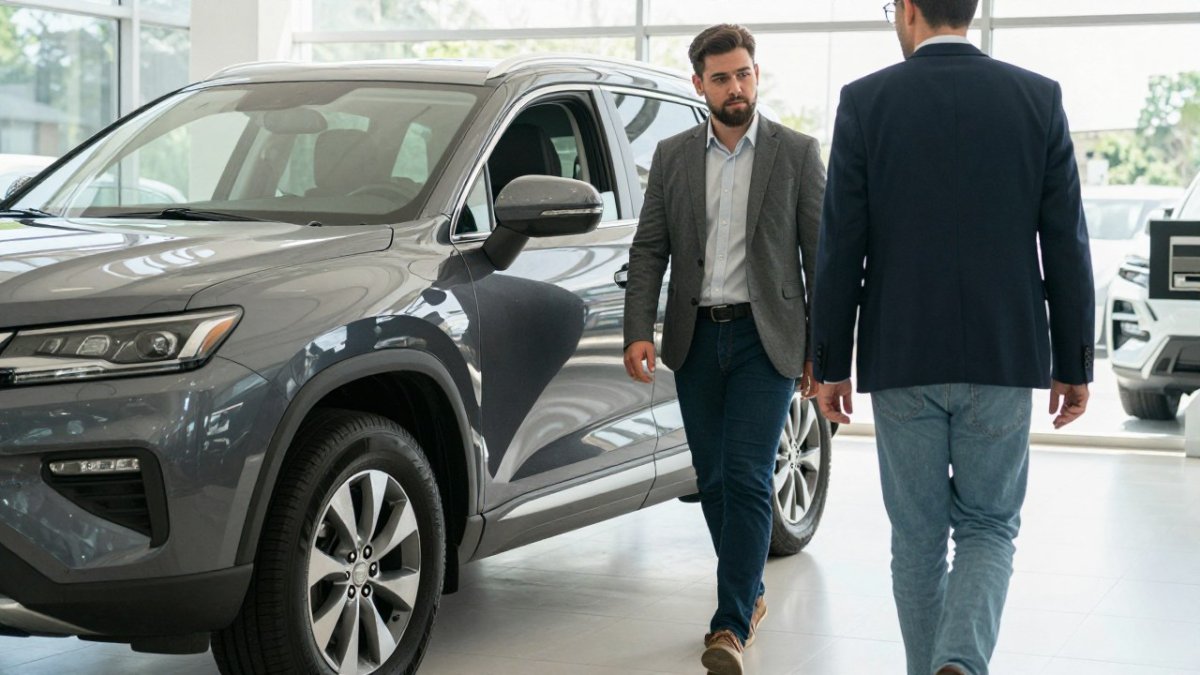
A test drive tells you things a showroom walk-around cannot. Plan a route that includes city streets, a stretch of highway, and a few turns so you can see how the vehicle behaves in different conditions. Bring a passenger if you can, so one person can focus on the road while the other listens for noises.
Before you start the engine, adjust the seat, mirrors, and steering wheel, and confirm that every warning light illuminates and then turns off. Pay attention to how the vehicle starts, idles, and shifts.
What to Check During the Drive
Listen for grinding, squealing, or knocking, and notice whether the engine runs smoothly under acceleration. Brake firmly in a safe spot to check for pulling, pulsing, or unusual noises. On the highway, watch for vibration at speed and any drift in the steering. Test the cruise control, turn signals, and infotainment system, and make sure the cabin is quiet enough for conversation at highway speed.
Vehicle History Reports, Titles, and Paperwork
A vehicle history report is one of the most useful tools you have. It can show past accidents, title issues, odometer discrepancies, and service events. Always review the report alongside the physical title and make sure the VIN on the vehicle matches the paperwork exactly.
Watch for titles marked as salvage, rebuilt, or flood-damaged, since these can affect insurance, resale value, and how the car performs over time. Ask to see any maintenance records the seller has, and confirm that the title is clear before you sign anything.
When you complete a sale, you should receive a bill of sale and clear title documentation. Keep copies of everything, and do not leave a dealership without understanding each document you signed.
Negotiating the Final Price Without Pressure
Negotiation works best when you have done your homework. Know the vehicle's market value by comparing similar listings, and be ready to explain your reasoning if you make an offer below the asking price. Focus on the out-the-door total rather than the monthly payment, since a low payment can hide a longer loan and higher overall cost.
Stay willing to walk away. A good deal will still be there tomorrow, and a sales environment that feels rushed is a signal to slow down. Review every line item on the final paperwork, including fees, add-ons, and any products you did not ask for.
Trade-Ins, Shipping, and Protection Options
If you are trading in your current vehicle, get its value from more than one source so you know what a fair offer looks like. Bring your title, payoff information if you still owe money, and maintenance records to help support its condition. We accept trade-ins and offer trade-in appraisals. Any additional trade-in offers depend on current availability and full terms, which we will confirm with you directly.
We also offer vehicle shipping to buyers. Shipping availability and pricing vary, so contact us for a quote before you commit. Optional vehicle service contracts and GAP coverage are available as well, so you can decide whether it fits your needs.
Browse Our Inventory and Start Your Financing Application
Shopping for a used car is easier when you know your budget, your financing options, and what to check before you buy. Browse our inventory of used cars, trucks, and SUVs to find vehicles that fit your needs. When you are ready, apply for financing, which is subject to lender approval and requirements, or contact us to ask about shipping availability and pricing.
Carolina Car Connections is here to help you shop locally or remotely.
Frequently Asked Questions
How does financing a used car work?
Financing a used car means borrowing money from a lender to pay for the vehicle, then repaying it in monthly installments over an agreed term with interest. Lenders review your income, credit history, and the vehicle itself before approving a loan. Approval, interest rate, and down payment are subject to lender approval and requirements, so no approval or specific rate can be guaranteed. Carolina Car Connections works with lenders offering options for a range of credit histories, and ITIN financing may be available with qualifying identification, subject to lender requirements.
What should you check on a used car test drive?
On a test drive, listen for unusual engine, brake, or suspension noises, and check that the transmission shifts smoothly. Test the brakes at different speeds, make sure the steering pulls neither left nor right, and confirm all dashboard warning lights turn off after startup. Drive on both city streets and a highway if possible. Use the used car test drive checklist in this guide to record what you notice before you talk price.
What questions should you ask when buying a used car from a dealer?
Ask whether the vehicle has a clean title, whether a vehicle history report is available, and whether any prior accidents or repairs are documented. Ask for maintenance and service records, the odometer reading, and whether the car has been inspected. Ask what fees are included in the price and what financing or protection options exist. Written answers are easier to rely on than verbal ones, so request them in writing when possible.
Should you get a used car inspected by a mechanic?
A pre-purchase inspection by an independent mechanic is one of the most useful steps you can take before buying a used vehicle. A mechanic can spot worn brakes, leaks, suspension problems, and frame damage that a test drive may miss. Ask the mechanic for a written report with a list of needed repairs, and use it to set your expectations for the price. Contact Carolina Car Connections to ask about your options when you reach out.
What documents should you get when buying a used car?
Get the vehicle title, a bill of sale showing the price and date, the vehicle history report, and any maintenance records the seller has. Make sure the title is clear and matches the seller's identity and the vehicle's VIN. Keep copies of financing paperwork and any warranty or service contract agreements. Review every document before signing, and ask questions about anything you do not understand.
How do you negotiate when buying a used car?
Start by researching the market value of similar vehicles, then base your offer on that research and on any issues found during inspection. Keep the conversation focused on the total out-the-door price rather than the monthly payment. Be prepared to walk away if the terms do not fit your budget. Negotiating calmly and with clear numbers usually produces a better outcome than pressure tactics.
What is a red flag when buying a used car?
Red flags include a seller who refuses a pre-purchase inspection, a title that is missing or does not match the seller, unexplained gaps in service history, and strong pressure to decide immediately. Be cautious if the odometer reading does not match the service records or if the vehicle history shows a salvage or rebuilt title. Any of these signs is a reason to slow down and ask more questions before you commit.
What should I do before visiting Carolina Car Connections?
Before you visit, set a budget that includes taxes, registration, and insurance, not just the vehicle price. Gather proof of income and identification if you plan to apply for financing. Write down the vehicle types and features you need, and list your questions in advance. If you want to shop remotely, contact us about shipping availability and pricing. Browse our inventory and apply for financing when you are ready.